
The Hair Dryer Enters Its Tech Era
Hair dryers have evolved far beyond simple tools used for drying hair. Today, they are high-performance grooming devices, merging cutting-edge engineering and beauty technology. Driven by user demand for faster, safer, and smarter styling, brands are pushing innovation in motor performance, airflow systems, hair care technologies, and ergonomic design.
This blog breaks down the five groundbreaking technological advancements that are defining the next generation of hair dryers and transforming them from household appliances into personal hair care solutions. Whether you’re a tech-savvy consumer, a professional stylist, or a curious buyer, understanding these innovations will help you make smarter purchasing decisions.
1. The Quiet Revolution: High-Speed Brushless Motors
What is a brushless motor, and how is it different?
Traditional blow dryers rely on brushed motors that use physical contact between carbon brushes and a rotating commutator. This friction leads to wear, noise, and heat generation. In contrast, brushless motors use electronic components to regulate movement, reducing mechanical friction.
Why does motor speed matter?
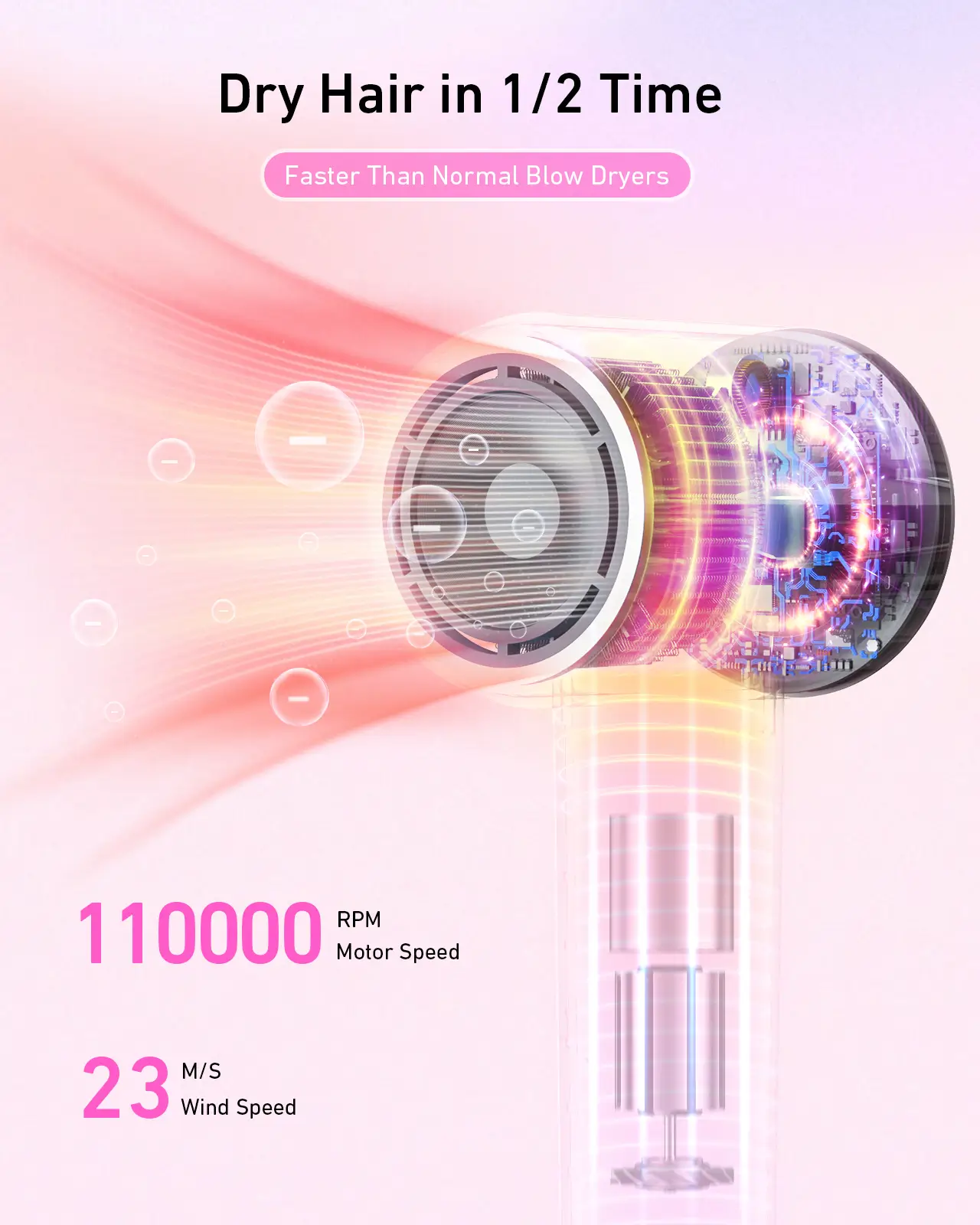
Speed directly impacts the power and efficiency of a hair dryer. For example, a 110,000 RPM brushless motor can produce a more focused and consistent airflow compared to traditional motors running at 20,000 RPM. This enables faster drying without increasing heat exposure, helping preserve hair health.
The science behind the silence
Brushless motors are naturally quieter, but innovation doesn’t stop there. Aerodynamic airflow designs, such as streamlined air ducts and suspended motor housings, further minimize vibration and air turbulence, resulting in a quieter operation—ideal for households with babies, pets, or anyone sensitive to noise.
2. Negative Ions & Plasma: Science or Marketing?
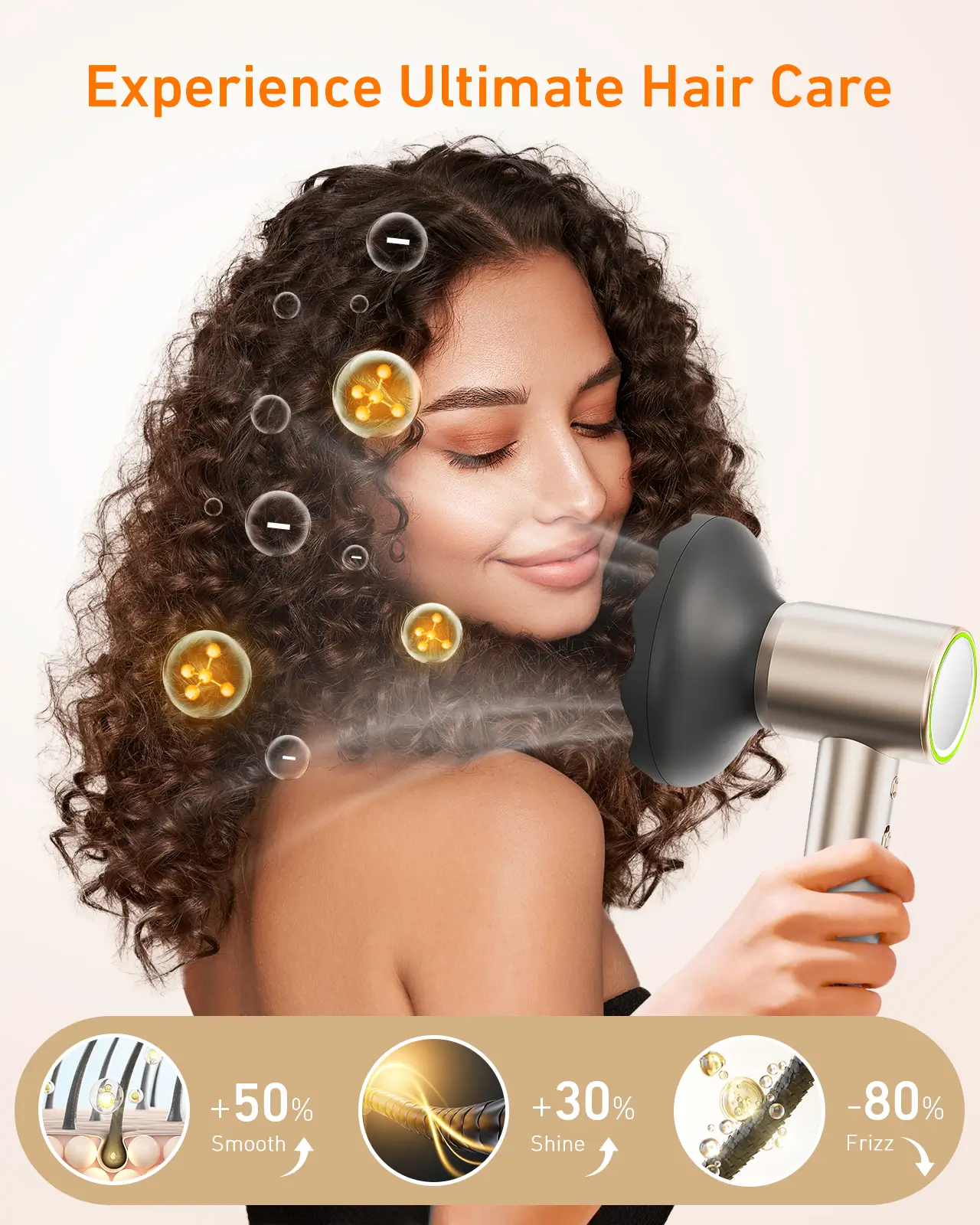
Negative ions are molecules with extra electrons, and in hair dryers, they’re used to counteract the positive ions in dry or damaged hair. These ions help break down water molecules, accelerating evaporation without the need for excessive heat. More importantly, they neutralize static, reduce frizz, and enhance shine, leaving hair smoother and more manageable.
Plasma Technology: A Step Further
While negative ions target surface-level issues like static and flyaways, plasma technology generates a combination of positive and negative ions in a controlled microenvironment. This ion balance penetrates deeper into the hair shaft, helping to maintain internal moisture balance, reduce breakage, and potentially improve scalp health by regulating oil levels. Plasma dryers often promise a more holistic approach to hair and scalp care.
Backed by Science or Just Hype?
Although both technologies are widely marketed, it’s important to separate scientifically-backed benefits from exaggerated claims. Independent lab tests and user testimonials suggest that ionic and plasma dryers do offer measurable improvements in hair texture and moisture retention. However, the actual benefits may vary depending on hair type, climate, and usage habits.
What Do Consumers Really Want?
For consumers, the core focus is on reducing frizz, preventing heat damage, and achieving smoother styles with less effort. These technologies provide value when integrated into thoughtfully engineered dryers that prioritize consistent airflow and temperature control. Look for models with verified performance data rather than relying on buzzwords.
3. Airflow Engineering: Why Some Dryers Are Just Faster
Understanding airflow types
The secret to efficient drying lies in airflow—not just heat. Hair dryers use various airflow systems, including:
- Linear air ducts: Direct airflow with minimal resistance.
- Turbine-style fans: Provide strong pressure but may diffuse energy.
- Helical or spiral ducts: Promote concentrated and swirling airflow for precision.
Speed, volume, and focus
High-end dryers optimize wind speed, volume, and focus to increase drying speed while reducing heat damage. Concentrated airflow penetrates hair layers, drying from the inside out.
Why high-end brands dry hair in 3 minutes
Premium brands engineer airflow systems for energy transfer efficiency. Combined with a narrow, shaped nozzle, this allows hot air to be delivered exactly where needed. Less energy is lost, and hair dries faster—often in under three minutes.
4. AI-Powered Temperature Control: A Smart Defense Against Heat Damage
How smart sensors monitor and respond in real-time
- Advanced hair dryers now include AI microprocessors and thermal sensors that monitor air temperature up to 50 times per second. These sensors adjust power output and airflow in real-time to avoid overheating.
- The difference between constant and adaptive heat
- Constant heat systems maintain one steady temperature.
- Adaptive (AI) systems cycle between temperatures to simulate natural cooling and minimize heat stress.
Why heat damage happens
- Hair is made of keratin protein and protected by overlapping cuticles. Excessive or uneven heat causes cuticle swelling, keratin denaturation, and irreversible moisture loss. AI-powered control helps prevent this.
Real protection or just smart marketing?
- When properly implemented, AI temperature control helps maintain hair health, especially for frequent users and those with fragile or chemically treated hair.
5. Magnetic Attachments: Function Meets Form
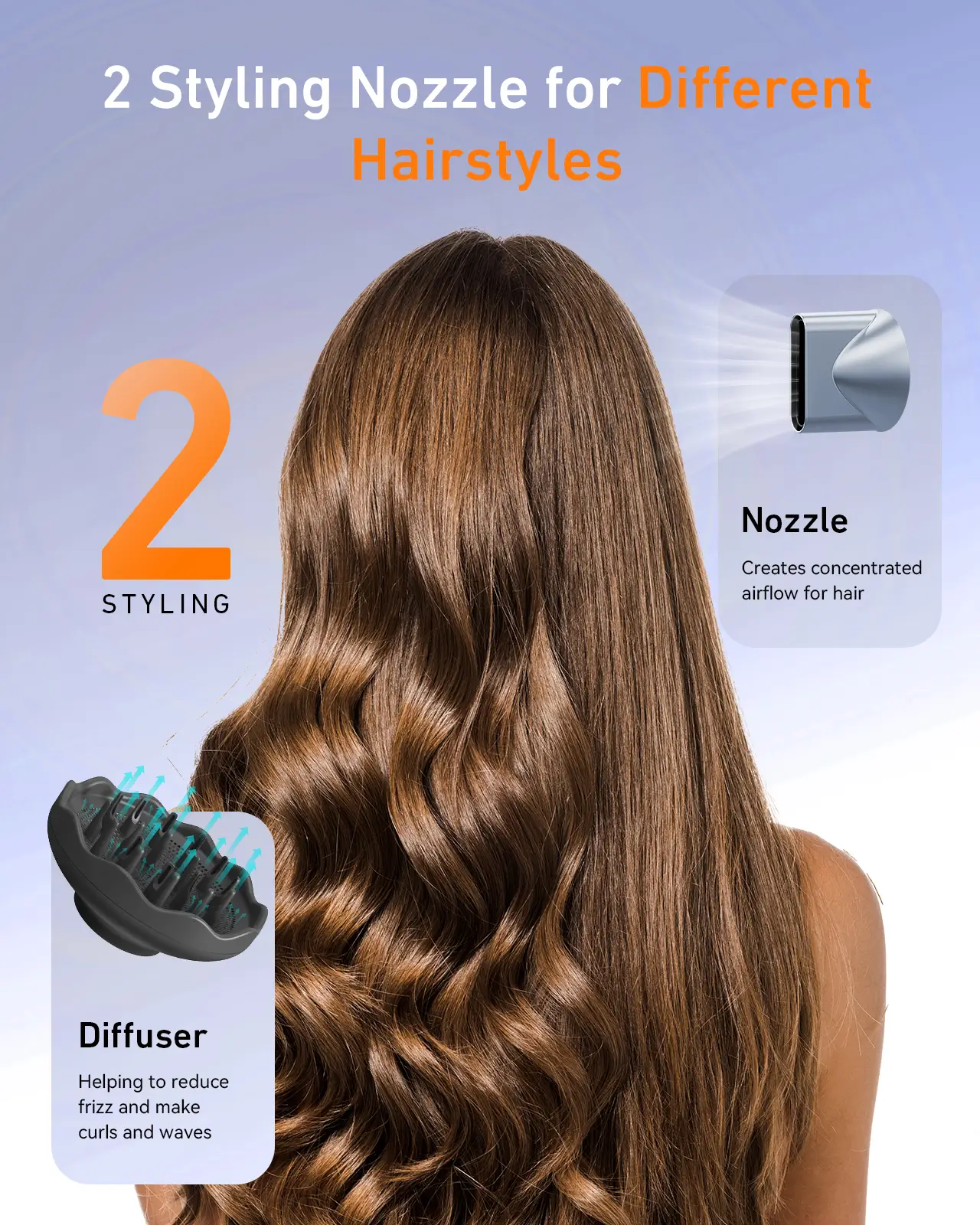
The shift from clip-on to magnetic nozzles
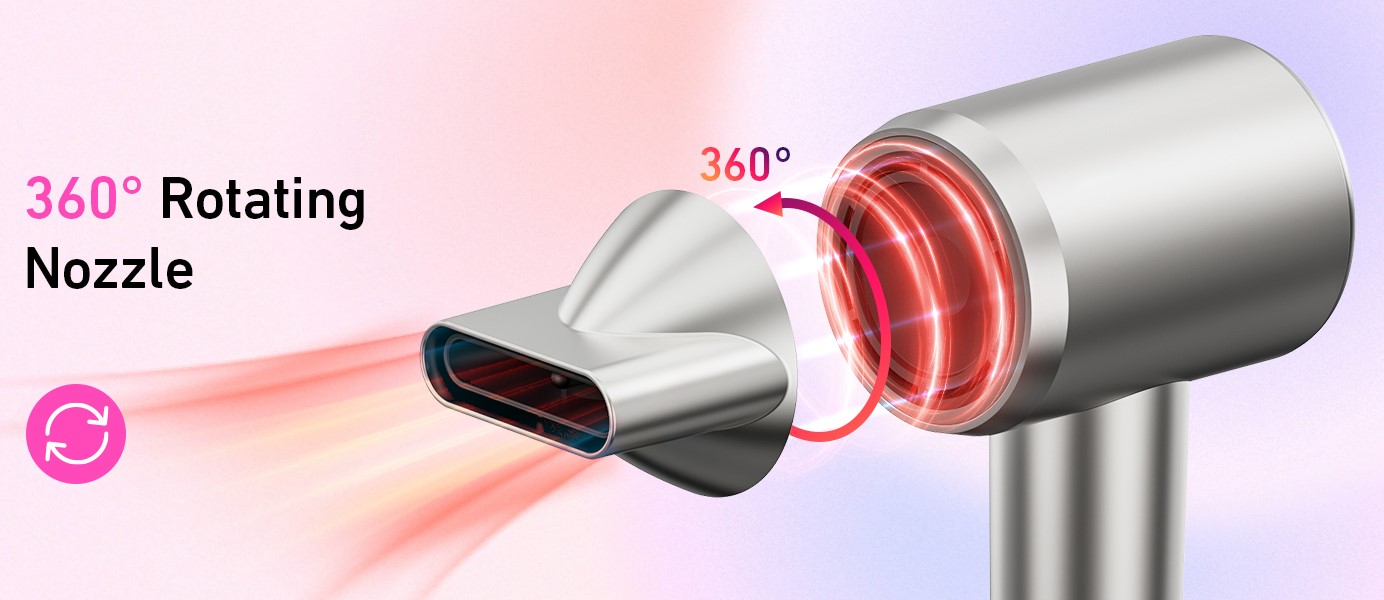
- Older dryers often featured plastic clip-on nozzles that were clunky, unstable, and hard to align. Magnetic attachments are a sleek solution—quick to swap, more secure, and longer-lasting.
Different nozzle types, different styling outcomes
Modern dryers include a range of magnetic attachments such as:
- Concentrators for sleek finishes
- Diffusers for enhancing curls
- Gentle air attachments for fine or sensitive scalps
The styling impact
- The right attachment dramatically improves results. For example, using a wide diffuser enhances natural curls, while a precision nozzle gives structure to bangs or roots.
Solving user pain points
- No more jammed or spinning nozzles
- Easier one-hand operation
- Reduced heat concentration at the scalp
Conclusion: The Future Is Where Innovation Meets Need
Hair dryers have moved far beyond their original design. Today’s innovations reflect a fusion of engineering excellence and user-centric design. Whether you care about speed, silence, styling precision, or hair protection, there’s a dryer on the market with technology tailored for your lifestyle.
When choosing your next dryer, consider:
- Your hair type and texture
- Desired styling results
- Household environment (e.g., kids or pets)
- Level of tech preference or simplicity
In the end, a blow dryer isn’t just a grooming tool—it’s a part of your daily wellness and beauty ritual.
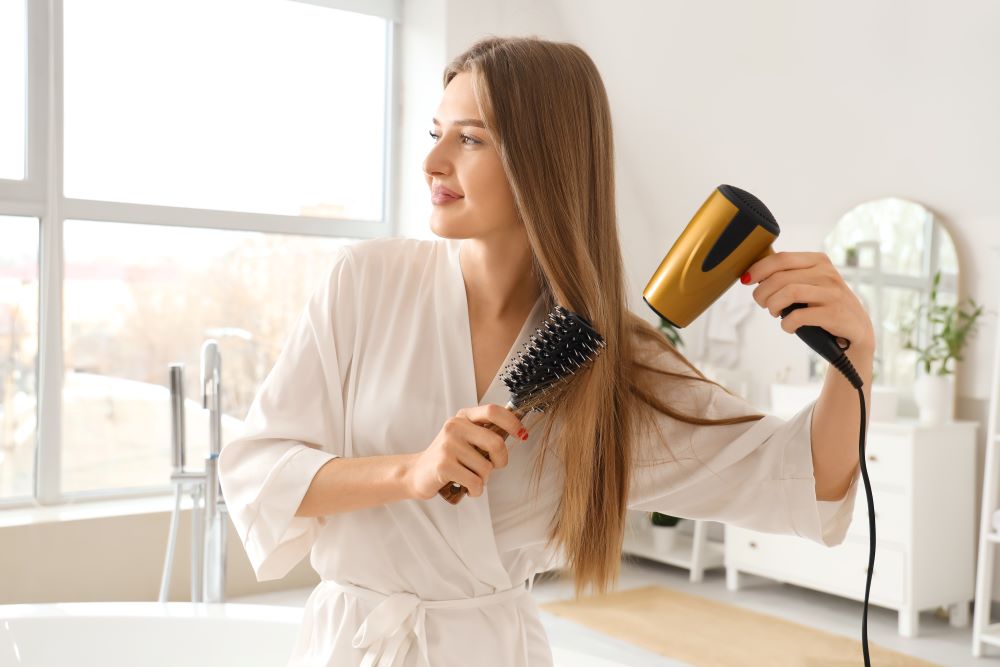
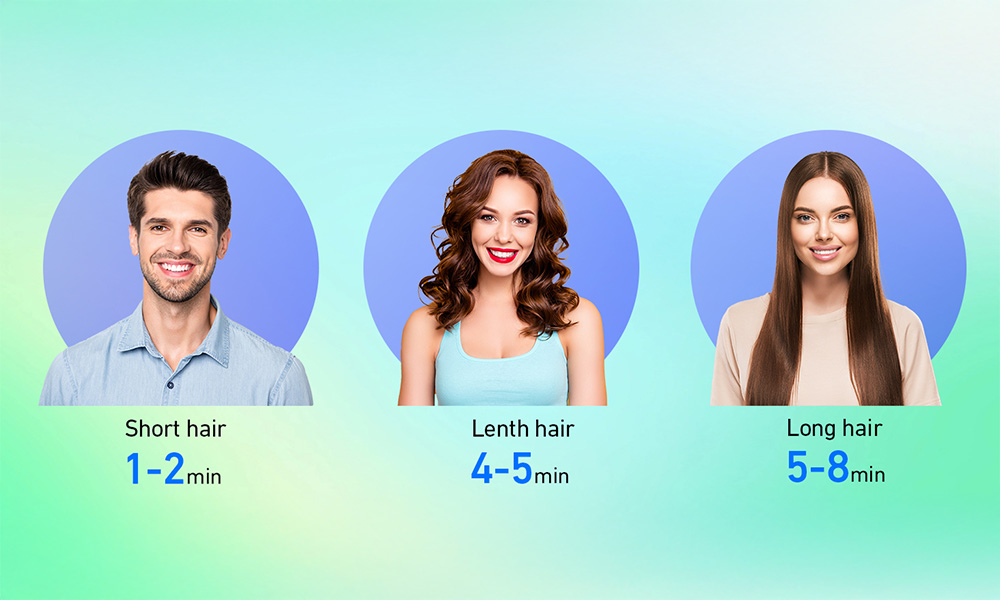

Ultimate Guide to Using a Hair Dryer with Nozzle for Styling
Discover the benefits of using a hair dryer with nozzle for faster drying, frizz reduction, and salon-quality styling at home.
Read More
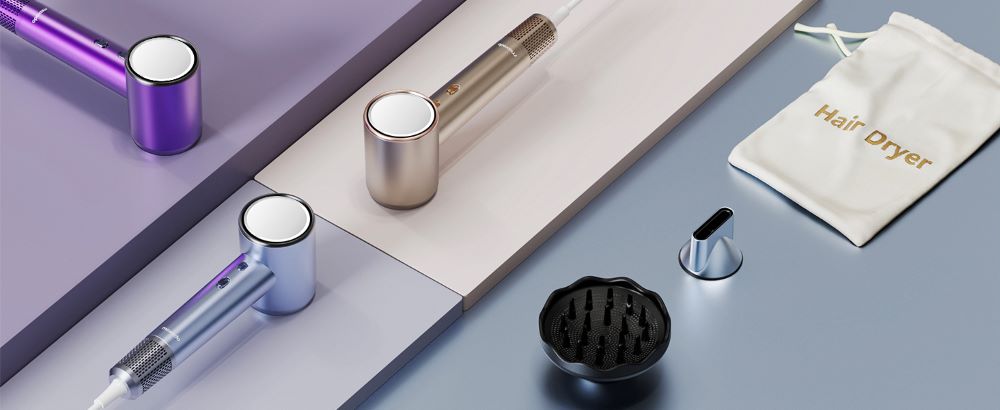
The Benefits of Using a Hair Dryer with a Diffuser
Discover how a diffuser hair dryer reduces frizz, protects hair, defines curls, and adds volume for healthier, natural styling.
Read More
Ultimate Hair Dryer Guide for Every Life Scenario
Find the perfect hair dryer for travel, gym, salon, or home. Maxodo offers fast-dry, quiet, and versatile all-in-one solutions.
Read More